2025 AHA Systems of Care Updates: What Changed in the Chain of Survival

Cardiac arrest survival rarely depends on one heroic moment. It depends on whether the right people, tools, decisions, and follow-up systems are already in place before the arrest happens.
That is the core message behind the 2025 AHA systems of care updates. The American Heart Association’s updated systems guidance frames cardiac arrest care as a connected chain that begins before collapse and continues well after return of spontaneous circulation, often called ROSC. The updates also make a clear point: both in-hospital cardiac arrest and out-of-hospital cardiac arrest need coordinated systems, not isolated actions.
This article is informational only and is not a substitute for clinical training, local protocols, or medical direction.

The Chain of Survival now applies across age and setting

One of the biggest structural changes is the move to a single unified Chain of Survival for adults and children, and for both in-hospital cardiac arrest and out-of-hospital cardiac arrest.
That does not mean every patient receives the same intervention in the same way. Pediatric resuscitation still differs from adult resuscitation. Hospital care still differs from care in a home, school, airport, or public park. The point is that the system logic is shared.
The updated chain begins with:
Prevention and preparedness
Early recognition of cardiac arrest
Activation of emergency response
High-quality resuscitation
Defibrillation when appropriate
Post-cardiac arrest care
Survivorship and recovery
This matters because the traditional Chain of Survival was often viewed as starting at collapse. The 2025 update makes prevention and readiness part of the chain itself. That is a practical shift.
For hospitals, that means early warning systems, rapid response teams, safety huddles, staff training, and clear escalation pathways are not side projects. They are part of cardiac arrest care.
For communities, it means CPR education, AED access, dispatcher-assisted CPR, public naloxone access, and bystander confidence all belong in the same conversation.
A unified chain also helps reduce fragmentation. Health systems, EMS agencies, dispatch centers, schools, public venues, and rehabilitation teams can work from the same framework, then adapt operations for their setting.
Updated focus | What it changes in practice |
One Chain of Survival | Adult, pediatric, in-hospital, and out-of-hospital systems share the same broad model |
Prevention and preparedness | Readiness becomes part of resuscitation quality, not an optional add-on |
Survivorship and recovery | Care does not end at hospital discharge or ROSC |
Data review | Every link in the chain should be measured and improved |
The message is simple: cardiac arrest care is a continuum. Weakness at any point can affect the outcome.
Prevention moves to the front of the system
The updates combine adult and pediatric recommendations on early warning systems and rapid response or medical emergency teams for preventing in-hospital cardiac arrest. They also add attention to safety huddles as a prevention tool.
That is a meaningful change because hospitals often treat arrest response and arrest prevention as separate work. The updated guidance brings them closer together.
An early warning system may help staff notice worsening heart rate, blood pressure, respiratory status, oxygenation, mental status, or other signs of decline. A rapid response team or medical emergency team can then bring skilled help to the bedside before the patient arrests.
Safety huddles add another layer. A huddle gives the care team a short, structured chance to ask: Who is at risk? What has changed? What support is needed now? What plan should be in place if the patient worsens?
These steps are not dramatic, but they can be lifesaving. They help teams act before the emergency becomes harder to reverse.

The 2025 updates also stress that systems need ongoing data review. A hospital might ask:
Were signs of deterioration recognized early?
Was the rapid response team activated at the right time?
Did staff know the escalation pathway?
Was the code team composition appropriate?
What did the debrief reveal?
Did similar events show the same pattern?
Without data, teams rely on memory and impressions. With data, they can find weak links and improve them over time.
This applies outside the hospital too. EMS systems and community programs can review dispatch recognition, bystander CPR rates, AED use, response intervals, ROSC, survival, and neurological outcomes when those data are available.
The update’s broader point is that quality improvement belongs in every link of the chain.
Community response gets a more practical playbook
The updated systems guidance puts several recommendations into a knowledge area focused on community initiatives to improve lay rescuer response to out-of-hospital cardiac arrest.
That focus reflects a hard truth. Many cardiac arrests happen before professional rescuers arrive. In those first minutes, bystanders and telecommunicators can change the course of the event.
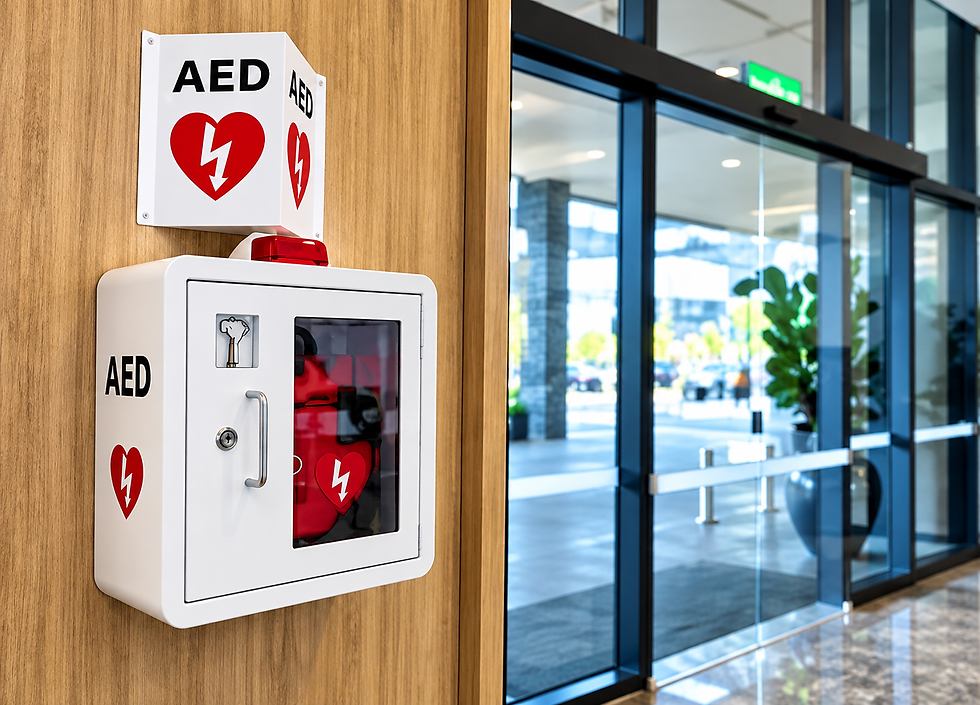
The guidance continues to support community approaches that raise awareness of cardiac arrest and increase the use of CPR and automated external defibrillators. AEDs matter because early defibrillation can be critical for shockable rhythms. CPR matters because it helps maintain blood flow until advanced help arrives.
The update also places public access to naloxone alongside public access to defibrillation. This does not mean the two tools treat the same condition. They do not. AEDs treat certain life-threatening heart rhythms. Naloxone can reverse opioid overdose when opioids are the cause of respiratory depression.
The systems connection is that both can be placed in public settings, both require community awareness, and both can save lives when used quickly and appropriately.
For community planners, schools, event venues, transit systems, and public health agencies, this creates a broader view of emergency readiness. A strong public response system may include:
Clearly visible AEDs
Public CPR training
Dispatcher-assisted CPR protocols
Naloxone access policies
Emergency action plans
Regular equipment checks
Simple signage
Practice drills in high-risk settings
The updates also clarify CPR instruction from telecommunicators. For adults, dispatchers should guide lay rescuers to use Hands-Only CPR when appropriate. For children, dispatchers should guide rescuers toward conventional CPR that includes breaths.
That distinction matters. Adult cardiac arrest is often cardiac in origin. Pediatric cardiac arrest more often involves breathing problems, which makes ventilation especially important.
The revised guidance also reiterates the No-No-Go framework for recognizing out-of-hospital cardiac arrest. The idea is straightforward: if the person is not responsive and not breathing normally, the caller should be guided to start CPR. This helps telecommunicators move quickly when a caller is unsure, frightened, or describing abnormal gasping.
The best community systems reduce hesitation. They do not expect a lay rescuer to become a clinician. They make the first steps clear enough to act.
Teams, transport, and recovery are now treated as system decisions
The 2025 updates include new recommendations on resuscitation team composition in both in-hospital and out-of-hospital settings. This is another sign that the AHA is looking beyond individual skills.
A resuscitation attempt depends on roles. Someone must lead. Someone must perform compressions. Someone must manage the airway. Someone must handle defibrillation. Someone must give medications when indicated. Someone must document. Someone must communicate with family or coordinate next steps.
When roles are unclear, even skilled people can work inefficiently. A good system defines roles before the emergency. It also trains teams to adapt when fewer people are available, which is common in the field and in smaller facilities.
The updates also reiterate clinical debriefing and add support for both immediate and delayed debriefing after CPR events.
A hot debrief happens soon after the event, while details are fresh. It can capture what went well, what was confusing, and whether equipment or process issues need quick attention.
A cold debrief happens later. It allows time to review records, monitor data, and discuss the event in a less pressured setting. Both have value. Used together, they can support learning without turning every review into blame.
Transport decisions remain an area of uncertainty, and the update reflects that. The guidance addresses on-scene resuscitation compared with transport during ongoing CPR, transport for extracorporeal CPR, known as ECPR, and interfacility transfer to cardiac arrest centers.
These are not simple decisions. Transport during ongoing CPR can interrupt care and create safety risks. Staying on scene may allow better-quality resuscitation, but some patients may need treatments only available at specialized centers. After ROSC, transfer decisions can also affect access to advanced post-arrest care.
The update does not pretend that one answer fits every situation. Instead, it points systems toward planning. EMS agencies, hospitals, cardiac arrest centers, and ECPR centers need shared criteria, clear communication, and regional agreements.
Key questions include:
Which patients may benefit from transport during ongoing resuscitation?
When is ECPR available and appropriate under local protocols?
Which hospitals can provide targeted post-arrest care?
How should EMS communicate with receiving centers?
When should a patient be transferred after ROSC?
How will data be reviewed across agencies and hospitals?
That kind of planning can reduce on-the-spot confusion. It can also help avoid overpromising advanced therapies that are not available in real time.
The updates also give new attention to postresuscitation recovery. Survival after cardiac arrest is not only about leaving the hospital alive. Survivors may face cognitive changes, emotional stress, physical weakness, cardiac follow-up needs, and family strain.
A system of care for recovery may include:
Neurologic and cardiac follow-up
Rehabilitation planning
Medication review
Mental health screening
Support for family and caregivers
Clear discharge instructions
Connection to survivor resources
Feedback loops to EMS and hospital teams
This is an important shift. Resuscitation success should include what happens after the pulse returns.

The main takeaway is that survival is a system result
The 2025 AHA systems of care updates make cardiac arrest care broader, more connected, and more accountable. The Chain of Survival now starts before the arrest and follows the survivor into recovery. It applies across age groups and care settings while still allowing differences in adult and pediatric care.
Several themes stand out:
Prevention and preparedness are now central parts of the chain.
Community response depends on CPR, AED access, naloxone access, and dispatcher guidance.
Telecommunicators should tailor CPR instructions for adults and children.
Hospitals need early warning systems, rapid response teams, and safety huddles.
Resuscitation teams need clear composition and defined roles.
Debriefing should include both immediate and delayed review.
Transport and transfer decisions require regional planning.
Survivorship deserves a real system, not an afterthought.
The practical lesson is clear. Better cardiac arrest outcomes do not come from one link alone. They come from a chain that is ready, measured, practiced, and improved over time.
Reference
American Heart Association. (2025). Highlights of the 2025 American Heart Association guidelines for CPR and emergency cardiovascular care. American Heart Association


Comments